
FDA grants accelerated approval to neladalkib for ALK-positive lung cancer
- On 17 November 2026 the FDA granted accelerated approval to Nelkarmi (neladalkib).
- It treats advanced ALK-positive non-small cell lung cancer after earlier targeted therapy.
- Approval is based on the ALKOVE-1 trial of 222 patients.
- Response rates were 49% in one cohort and 32% in a more heavily pretreated cohort.
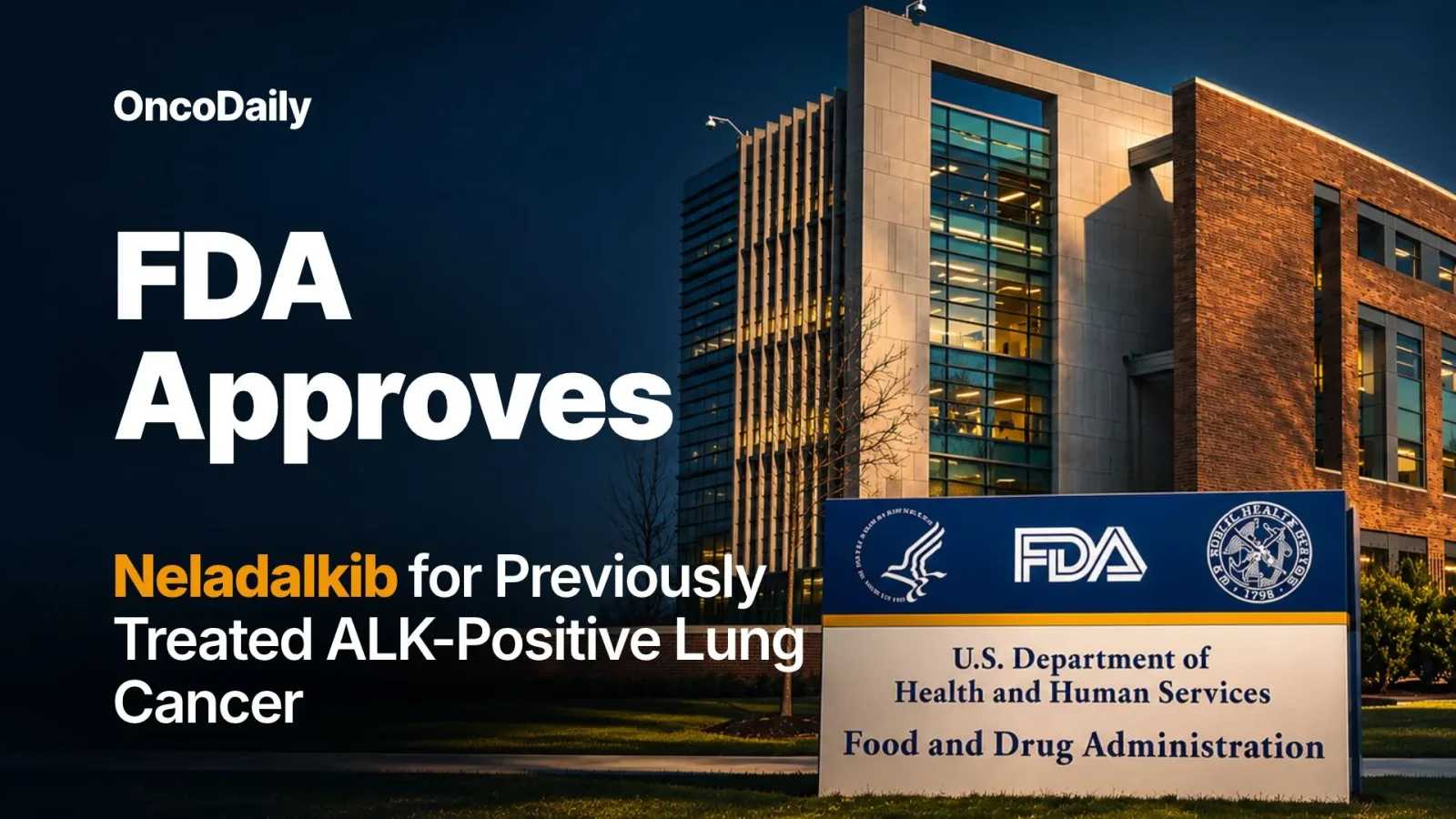
The FDA granted accelerated approval to Nelkarmi (neladalkib) on 17 November 2026 for locally advanced or metastatic ALK-positive non-small cell lung cancer that has progressed after earlier targeted therapy.
Trial results
Approval is based on ALKOVE-1, which enrolled 222 patients. The overall response rate was 49% in a cohort of 67 patients and 32% in a cohort of 155 more heavily pretreated patients. Intracranial responses were 55% and 26%, which matters because this cancer often spreads to the brain.
What accelerated approval means
Accelerated approval relies on early measures such as response rate; continued approval depends on confirmatory trials. The dose is 150 mg once daily, and raised liver enzymes are among the main side effects, so liver tests are monitored.
Sources: FDA — Novel Drug Approvals 2026, OncoDaily
This story is relayed from the source named above; responsibility for its content rests with the original source.
FAQ
What is neladalkib (Nelkarmi)?
Neladalkib is an oral targeted drug for ALK-positive non-small cell lung cancer that received FDA accelerated approval on 17 November 2026.
Who can use neladalkib?
Neladalkib is for patients with advanced ALK-positive lung cancer that progressed after earlier targeted therapy.
What did ALKOVE-1 show?
In ALKOVE-1 (222 patients), neladalkib produced a 49% response rate in a 67-patient cohort and 32% in a 155-patient, more pretreated cohort.
Does neladalkib work on brain metastases?
Yes. Neladalkib produced intracranial responses of 55% and 26% in the two ALKOVE-1 cohorts.
What does accelerated approval of neladalkib mean?
Neladalkib's accelerated approval rests on response rates; continued approval depends on confirming clinical benefit in later trials.