
Frederick Sanger: the scientist who decoded insulin and paved the way to reading genes
- Remembered on the anniversary of his death (19 November 2013): a British scientist who won the Nobel Prize in Chemistry twice.
- He determined the amino-acid sequence of insulin, the first protein to be fully sequenced.
- He developed a DNA sequencing method that became the foundation of genomics.
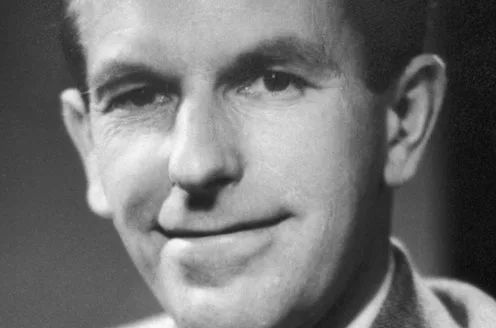
This week we remember British scientist Frederick Sanger, who died on 19 November 2013 in Cambridge. He is one of very few people to win two Nobel Prizes, both in chemistry.
Early life
Sanger was born on 13 August 1918 in Rendcomb, England; his father was a doctor. He studied natural sciences at the University of Cambridge, earned his PhD there in 1943 and stayed in Cambridge for his whole career.
Also read: Frederick Banting at 135: the Canadian surgeon behind insulin and World Diabetes Day
First breakthrough: the structure of insulin
Sanger worked out the amino-acid sequence of insulin, the first protein whose full sequence was known. He showed that every protein has a defined sequence, opening the way to understanding hormones and later manufacturing insulin. This earned him the 1958 Nobel Prize in Chemistry.
Second breakthrough: reading DNA
He developed a method to read the base sequence of DNA, later known as “Sanger sequencing”, which earned his second Nobel Prize in Chemistry in 1980, shared with Walter Gilbert and Paul Berg. The method became the foundation of genomics and of major efforts such as the Human Genome Project.
Why it matters today
Much of modern genetic testing, diagnosis of inherited diseases and precision cancer medicine builds on what Sanger began in his Cambridge laboratory.
Sources: NobelPrize.org — Biography (1958), NobelPrize.org — Facts (1980)
This story is relayed from the source named above; responsibility for its content rests with the original source.
FAQ
Who was Frederick Sanger?
Frederick Sanger (1918–2013) was a British biochemist who won the Nobel Prize in Chemistry twice, in 1958 and 1980.
What did Frederick Sanger discover about insulin?
Frederick Sanger determined insulin's amino-acid sequence, making it the first fully sequenced protein, which earned the 1958 Nobel Prize.
What is Sanger sequencing?
Sanger sequencing is the method Frederick Sanger developed to read DNA's base sequence, which earned his second Nobel Prize in 1980.
When did Frederick Sanger die?
Frederick Sanger died on 19 November 2013 in Cambridge, United Kingdom.
How does Frederick Sanger's work help medicine today?
Sanger's DNA sequencing method underpins genetic testing, diagnosis of inherited diseases and precision cancer medicine.