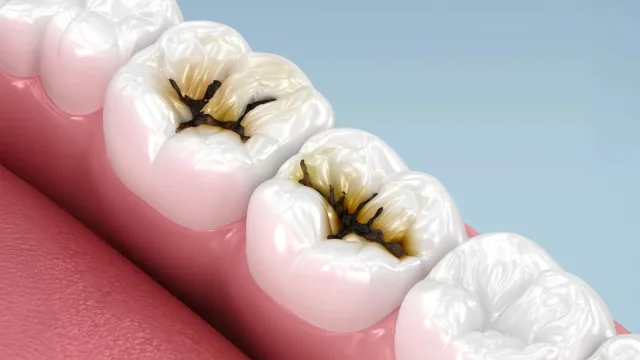

AI model uses social factors to identify groups at high risk of tooth decay
- NYU and a Brazilian university trained a machine learning model on data from almost 24,000 people in Brazil.
- Wealth and household density were the strongest signals of cavity risk.
- Among 12-year-olds, 62.5% without fluoridated water had cavities versus 35.5% with it.
- The tool targets population groups for prevention rather than diagnosing individuals.

Researchers from New York University College of Dentistry and the Federal University of Santa Maria in Brazil have built an artificial intelligence (AI) model that predicts which population groups are at high risk of tooth decay. The study was published in the journal Caries Research.
The data
The model was trained on data from almost 24,000 people in Brazil's 2023 national oral health survey. Machine learning was used to predict cavity risk and severity by age group and to measure how much each social factor contributed.
Also read: Irish study finds no link between lifelong water fluoridation and cognitive function in older adults
What predicts cavities
- Wealth and household density were the strongest risk signals.
- Non-white groups had higher risk across ages, while private dental insurance and a recent dental visit were protective.
- Water fluoridation was a strong predictor: 62.5% of 12-year-olds without fluoridated water had cavities, compared with 35.5% of those with it.
Professor Fernando Neves Hugo, chair of epidemiology and health promotion at NYU College of Dentistry, said the approach could help target resources and preventive care to the groups that would benefit most.
Limits
The model is meant for public health planning, not for diagnosing a single patient, and it does not show who will develop a new cavity over time. It was built on Brazilian data, and local factors such as access to dental care may change which predictors matter in other countries. The team plans similar work with US survey data.
Sources: Dentistry, The Brighter Side of News
This story is relayed from the source named above; responsibility for its content rests with the original source.
FAQ
How does the AI model predict tooth decay risk?
The AI model from NYU and the Federal University of Santa Maria uses social and demographic factors from survey data to predict cavity risk and severity by age group.
What were the strongest predictors of cavities in the AI study?
In the AI cavity study, wealth and household density were the strongest predictors of cavity risk.
Does water fluoridation affect cavities in the AI study?
Yes, in the AI study 62.5% of 12-year-olds without fluoridated water had cavities, compared with 35.5% of those with fluoridated water.
What data was the cavity prediction model trained on?
The cavity prediction model was trained on data from almost 24,000 people in Brazil's 2023 national oral health survey.
Can the AI cavity model diagnose an individual patient?
No, the AI cavity model is designed to identify high-risk population groups for prevention programmes, not to diagnose individual patients.