
Titanium particles may explain why dental implant infections resist antibiotics
- An estimated 10% to 20% of dental implant patients develop peri-implantitis, an infection that destroys jawbone.
- Rutgers researchers found that bacteria corrode implants and release tiny titanium particles.
- The particles trap immune cells in excessive inflammation and weaken their ability to clear bacteria.
- Blocking the TRPC1 calcium channel prevented the disease in mice, pointing to a possible drug target.
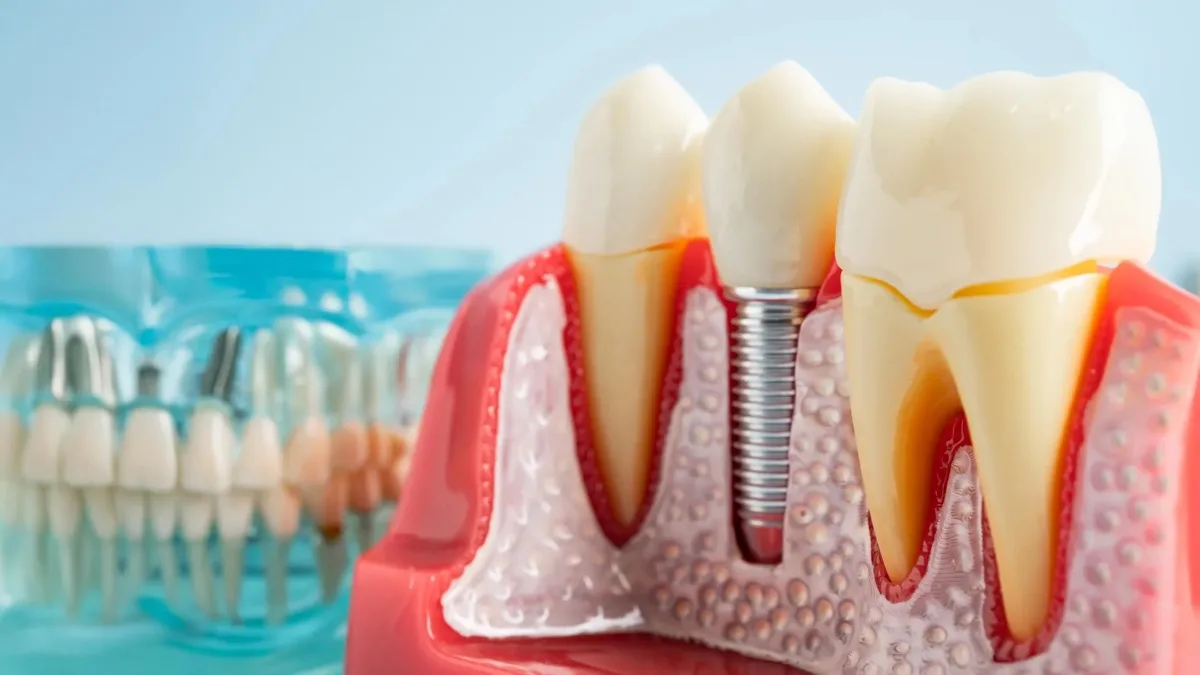
Dental implants allow millions of people to replace missing teeth with fixed teeth. However, an estimated 10% to 20% of implant patients eventually develop peri-implantitis, an infection that damages the jawbone around the implant. Antibiotics that work for gum disease around natural teeth succeed in fewer than half of cases around implants.
The discovery
A study published in PNAS Nexus by scientists at the Rutgers School of Dental Medicine suggests why. Bacteria on the implant surface form acidic biofilms that slowly corrode the titanium, releasing billions of particles smaller than a red blood cell. Particles can also be dislodged by cleaning with instruments designed for natural teeth.
Also read: A toothbrush that makes electricity as you brush to kill bacteria behind decay and gum disease
In the gums, the particles become coated with a bacterial toxin. Immune cells called macrophages try to swallow them but cannot digest titanium, so they become stuck in a state of excessive inflammation and release large amounts of inflammatory signals such as interleukin-1 beta. In lab tests, macrophages exposed to the particles engulfed fewer than half as many bacteria as unexposed cells.
A possible target
The researchers traced the reaction to TRPC1, a calcium channel in macrophages. Mice lacking this channel had much smaller abscesses, less inflammation and cleared bacteria again. Senior author Dr. Georgios Kotsakis said that, for the first time, the team can show why antibiotic treatments that work around teeth fail around implants.
Limits
The work combined human tissue samples, lab studies of human immune cells and experiments in mice. A treatment that targets TRPC1 in patients has not yet been developed or tested.
Source: ScienceDaily (Rutgers University)
This story is relayed from the source named above; responsibility for its content rests with the original source.
FAQ
What is peri-implantitis?
Peri-implantitis is an infection around a dental implant that damages the surrounding jawbone, and it affects an estimated 10% to 20% of implant patients.
Why do antibiotics often fail for dental implant infections?
The Rutgers study suggests that titanium particles released from corroded implants trap immune cells in excessive inflammation, so the infection resists antibiotics that work around natural teeth.
Where do titanium particles around dental implants come from?
Titanium particles are released when acidic bacterial biofilms corrode the implant surface, and they can also be dislodged during cleaning with instruments designed for natural teeth.
What is TRPC1 and why does it matter for dental implants?
TRPC1 is a calcium channel in immune cells; mice without it were protected from implant-related bone destruction, making it a possible drug target for peri-implantitis.
Is there a new treatment for peri-implantitis yet?
Not yet; the TRPC1 discovery points to a possible future treatment for peri-implantitis, but no therapy has been developed or tested in patients.