How to choose a zirconia crown shade that looks natural
- Whitening does not change the colour of a crown once it is fitted, so natural teeth are whitened first and the crown shade is chosen afterwards.
- The shade is taken at the start of the appointment in natural light, because teeth dry out during treatment and look lighter than they are.
- Zirconia is very strong; solid (monolithic) zirconia is the toughest, while a porcelain layer on top gives a translucency closer to a natural tooth.
- A crown that is much whiter than the teeth next to it stands out, so the aim is harmony rather than maximum whiteness.

Almost everyone planning crowns asks the same question: which shade should I choose? The answer is not "the whitest one". A crown that draws attention to its colour loses its most important cosmetic quality, which is looking like a natural tooth. This guide walks you through the practical steps for choosing a zirconia crown shade that suits your face and the teeth around it.
Why the shade is decided before the crown is made
The American Dental Association (ADA) explains that whitening will not work on caps, veneers, crowns or fillings, and the NHS says whitening can only lighten the colour of natural teeth. In practice, a crown stays the colour it was made. If you want whiter teeth, whiten them first, give the new colour time to settle, and then have the crown shade matched to the result.
Solid zirconia or porcelain-layered?
Cleveland Clinic describes zirconia crowns as extremely durable, able to withstand heavier forces than other ceramic crowns and gentle on the opposing teeth. At the clinic you will usually hear about two options:
- Monolithic (solid) zirconia: one strong piece, well suited to back teeth that take the most chewing force.
- Porcelain-layered zirconia: a ceramic layer adds translucency and colour gradation closer to a natural tooth, so it is often preferred at the front, although the layer is more prone to chipping.
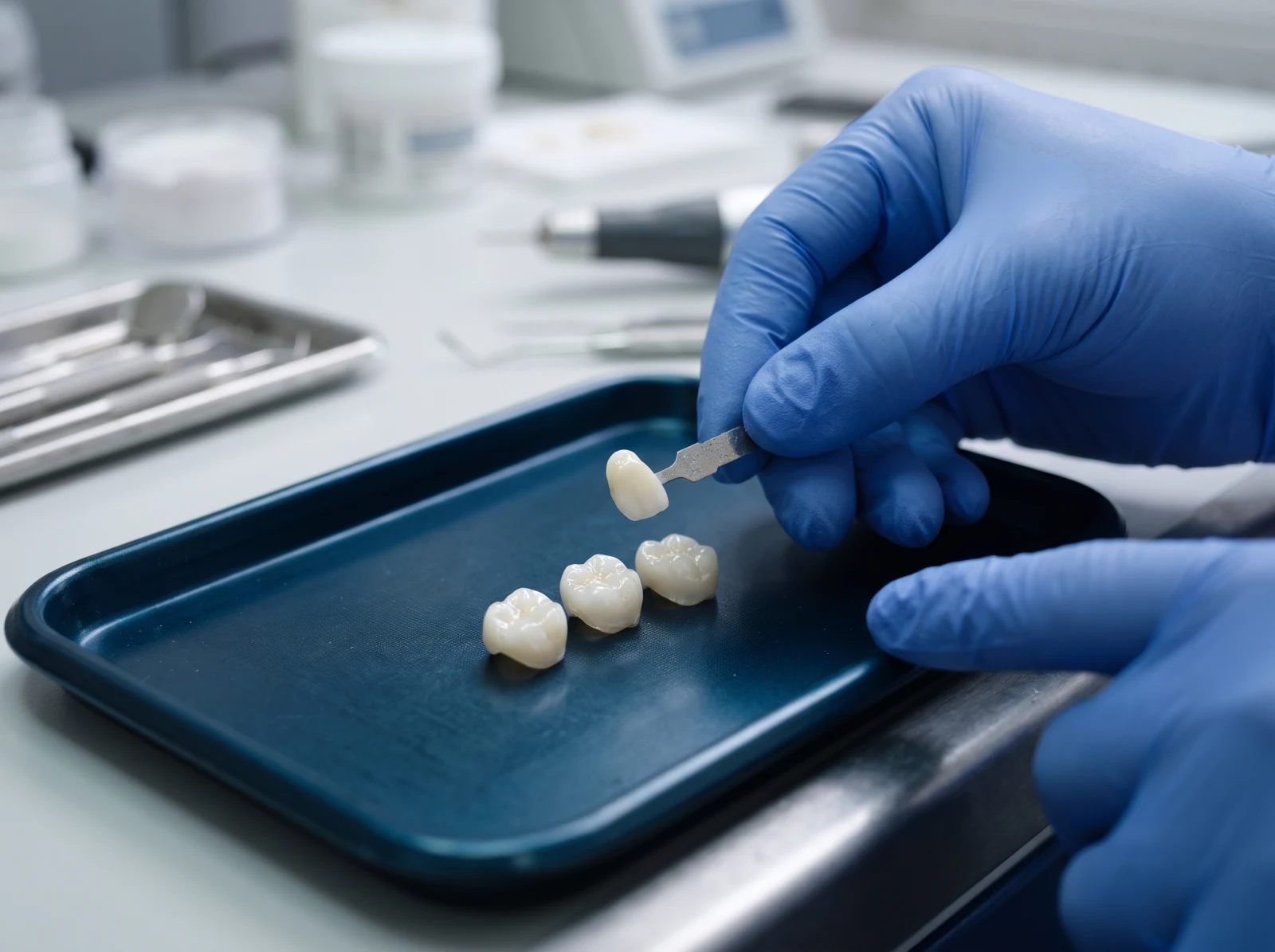
Five steps to an accurate shade
- Daylight: the shade is best taken near a window or under daylight-balanced lighting, not under a warm overhead lamp.
- Early in the appointment: teeth dry out within minutes of keeping the mouth open and look lighter, so the shade is recorded before work begins.
- Shade guide and photos: the dentist compares guide tabs with your teeth and photographs them side by side for the lab.
- Neighbouring teeth, not pure white: for a single crown, the reference is the teeth around it.
- Try-in before cementing: ask to see the crown in your mouth, in natural light, before final glazing and fitting.
Habits that keep the match over time
A crown does not stain the way enamel does, but the natural teeth beside it do darken with coffee, tea and smoking, so a gap in colour can appear over the years. A recent study found that smoking leaves a measurable mark on the smile; read our report on how smoking dulls the whiteness of teeth and gums. Cleveland Clinic notes that crowns generally last between five and 15 years with proper care.
Before deciding, it helps to compare the common shades and what suits different skin tones in this guide to zirconia crowns, their shades and how they are made.
The bottom line
The right shade is the one nobody notices. Whiten first if you want to, have the shade taken in daylight at the start of the visit, and try the crown in before it is fitted.
To compare zirconia options and plan your treatment, read the International Clinics guide to zirconia crowns in Turkey.
Sources: Cleveland Clinic: Dental crowns, American Dental Association (MouthHealthy): Teeth whitening, NHS: Teeth whitening
FAQ
Can zirconia crowns be whitened after they are fitted?
No. Zirconia crowns do not respond to whitening; the American Dental Association explains that whitening does not work on crowns, veneers or fillings, so natural teeth are whitened before the crown shade is chosen.
When should the shade of a zirconia crown be chosen?
The shade of a zirconia crown should be chosen at the start of the appointment in daylight-like lighting, because teeth dry out during treatment and look lighter than their real colour.
What is the difference between solid and porcelain-layered zirconia?
Solid (monolithic) zirconia is stronger and suits back teeth, while porcelain-layered zirconia has a translucency closer to a natural tooth and suits front teeth, although the porcelain layer can chip.
Is the whitest shade the best choice for zirconia crowns?
Not usually. A zirconia crown that is lighter than the neighbouring teeth looks artificial; the best shade blends with the natural teeth and skin tone.
Does a zirconia crown change colour over time?
A zirconia crown keeps its colour, but the natural teeth around it can stain from coffee, tea and smoking, so a colour difference may develop over time.
How long do zirconia crowns last?
Cleveland Clinic says dental crowns generally last between five and 15 years with proper care, and zirconia is one of the most durable ceramic crown materials.