Julius Robert Mayer, the ship's doctor whose sailors' blood led him to the conservation of energy
- Julius Robert Mayer, a German physician, was born in Heilbronn on 25 November 1814, the son of a pharmacist.
- As a ship's doctor on a voyage to Jakarta, Mayer noticed that sailors' venous blood was unusually bright red in the tropics.
- In 1841 Mayer stated one of the first versions of the conservation of energy, and in 1842 he published a value for the mechanical equivalent of heat.
- Mayer described oxidation as the primary source of energy for living creatures, but recognition came late.
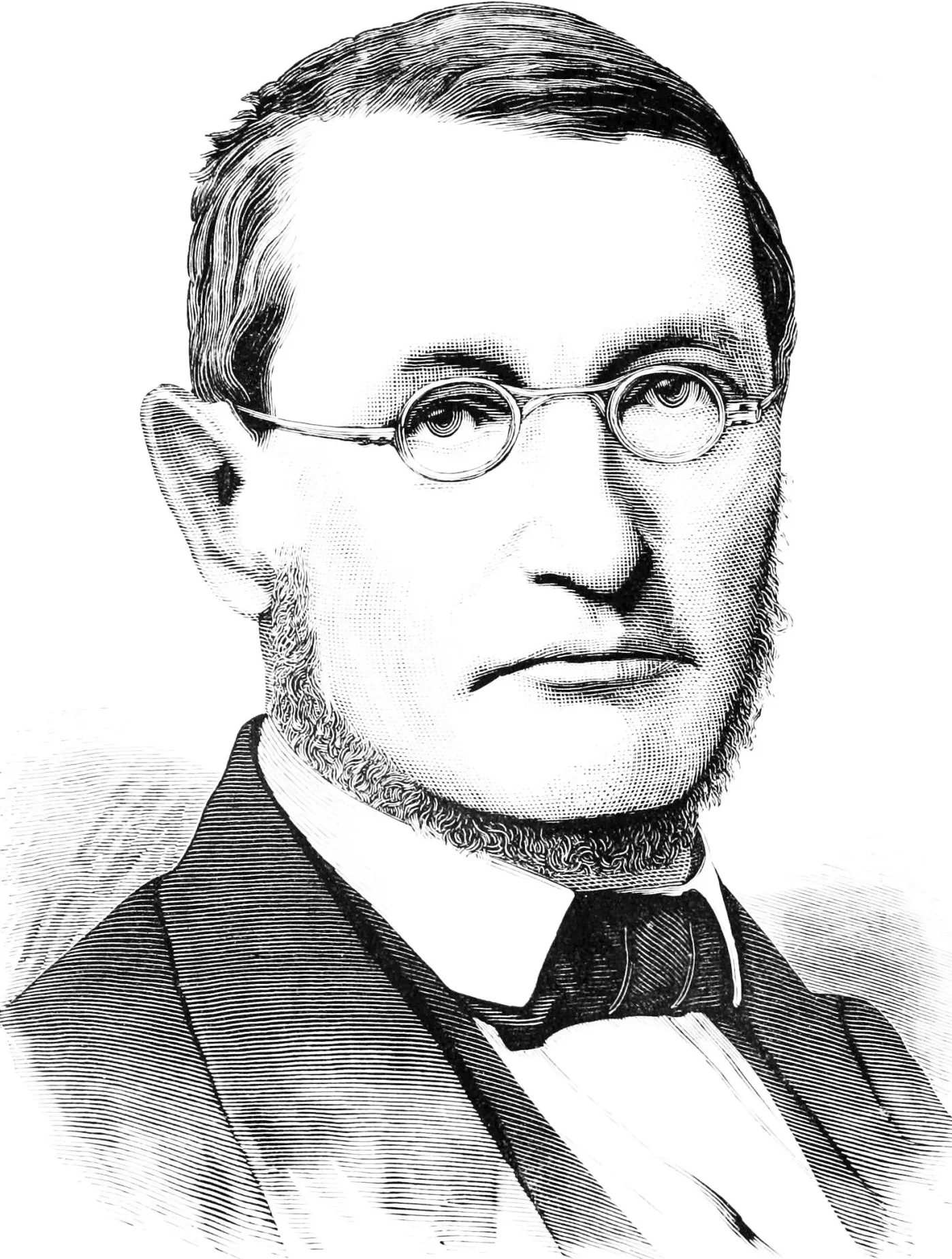
On this day, 25 November 1814, Julius Robert Mayer was born in Heilbronn, Württemberg, the son of a pharmacist. He studied medicine at Tübingen and took his doctorate in 1838. Physics was not his calling, until a single sea voyage changed that.
A clue in the sailors' veins
Mayer signed on as physician aboard a Dutch three-masted ship bound for Jakarta. There he noticed that his sailors' venous blood was an unusually bright red in the tropical heat. His explanation: in a hot climate the body needs to "burn" less oxygen to keep warm. That led him to a bigger question: where do the body's heat and energy actually come from?
From medicine to a law of nature
Back home in 1841, he set out one of the earliest statements of what we now call the conservation of energy: energy can be neither created nor destroyed. In 1842 he published a numerical value for the mechanical equivalent of heat, described oxidation as the primary source of energy for any living creature, and proposed that plants turn light into chemical energy.
Recognition, too late
His first paper was rejected and priority went to James Joule. Mayer endured hard years, two of his children died in quick succession, and his mental health suffered. In 1862 the physicist John Tyndall revived his work in London, and in 1867 he was ennobled as "von Mayer". He kept practising medicine until his death in 1878.
Like Wilhelm Röntgen, who let us see inside the body, Mayer shows how one careful observation can open a whole new field.
Sources: Wikipedia: Julius von Mayer, Wikipedia (German): Robert Mayer
This story is relayed from the source named above; responsibility for its content rests with the original source.
FAQ
Who was Julius Robert Mayer?
Julius Robert Mayer (1814–1878) was a German physician from Heilbronn and one of the founders of thermodynamics, among the first to state the conservation of energy.
What observation led Mayer to his discovery?
As a ship's doctor on a voyage to Jakarta, Julius Robert Mayer noticed that sailors' venous blood was bright red in the tropics and reasoned the body needed less oxygen to stay warm.
When did Mayer state the conservation of energy?
Julius Robert Mayer stated one of the first versions of the conservation of energy in 1841 and published a value for the mechanical equivalent of heat in 1842.
How does Mayer's work relate to the human body?
Julius Robert Mayer described oxidation as the primary source of energy for living creatures, meaning the body draws its heat and movement from burning food with oxygen.
Was Mayer recognised in his lifetime?
Julius Robert Mayer was recognised late: John Tyndall revived his work in 1862, and he was ennobled as von Mayer in 1867.