Protecting native hair after a hair transplant
- Transplanted hair comes from a zone that resists hair loss, but the native hair around it can keep thinning.
- In a randomised double-blind trial, 94% of men taking finasteride alongside a transplant showed clear hair gain, against 67% on placebo.
- Minoxidil and finasteride are the two FDA-approved medicines for hereditary hair loss.
- Whether to use either medicine is a decision for your doctor after assessing your case and discussing side effects.

Many people are delighted with their hair transplant a year after surgery, only to notice years later that the area around the transplanted hair is thinning again. That is not a failed transplant. It is hereditary hair loss continuing in the native hair that was never moved. This article explains why it happens and what the evidence says about the medicines that protect native hair and keep the result looking balanced.
Two kinds of hair on one head
Grafts are usually taken from the back and sides of the scalp, where hair is generally resistant to hereditary loss. The native hair on the front and crown, however, remains exposed to what doctors call miniaturisation: the follicle gradually weakens, producing thinner and shorter hairs until it stops altogether.
Also read: The first 30 days after a beard transplant
That is why the International Society of Hair Restoration Surgery (ISHRS) describes the ideal transplant candidate as someone whose hair loss has been stabilised with medication such as finasteride and minoxidil. A transplant redistributes hair; it does not switch off the genetic process behind the loss.
The two approved medicines
According to the ISHRS, only two medicines are approved by the US Food and Drug Administration (FDA) to stop hair loss and stimulate regrowth:
- Minoxidil: a solution or foam applied to the scalp, available in 2% and 5% strengths. The 5% strength was developed for men, but studies show women may benefit from it too.
- Finasteride: a tablet taken by mouth, prescription-only in the United States and intended for men.
The ISHRS notes that for some patients medication works better when combined with a transplant.
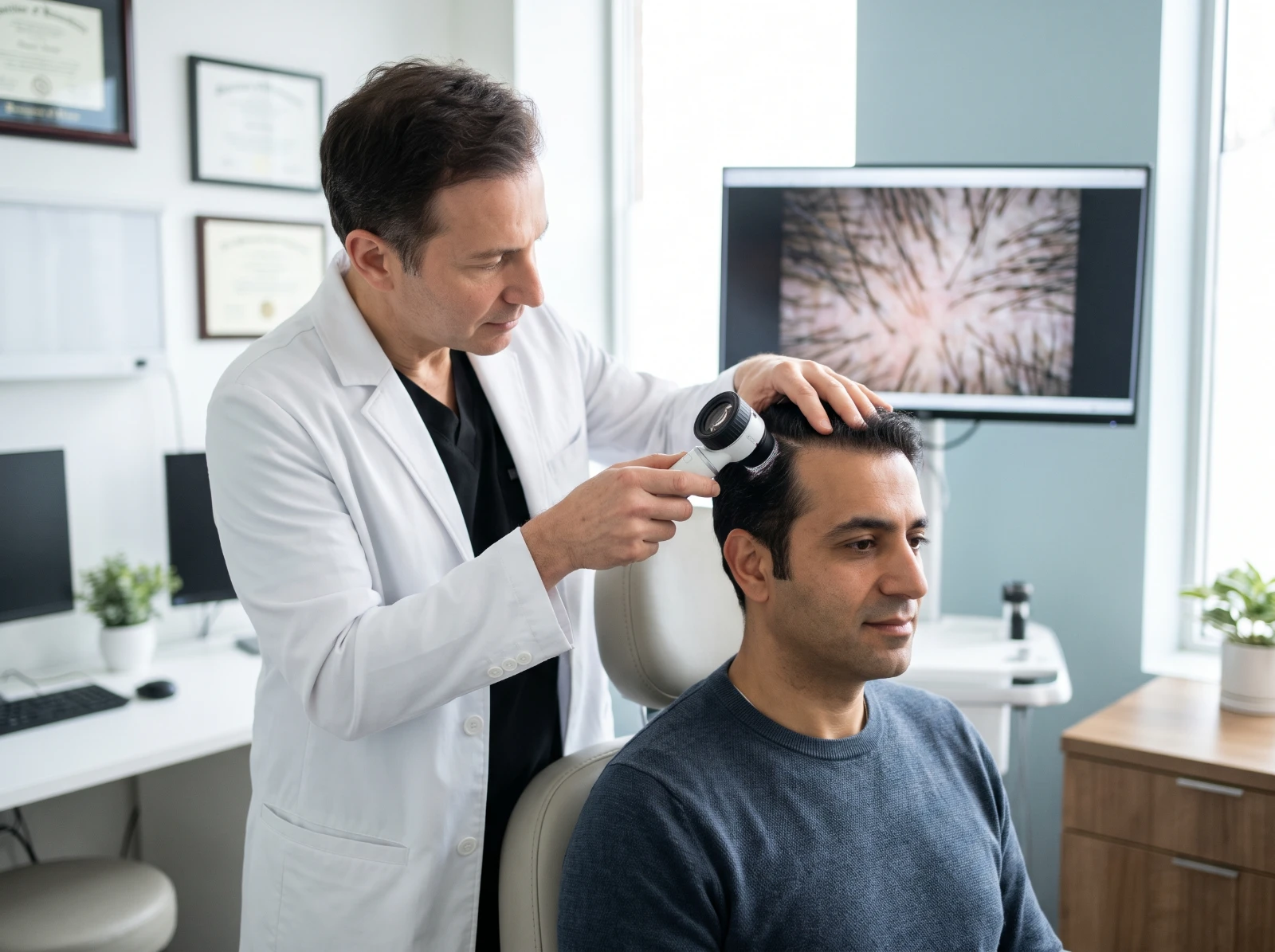
What a clinical trial found on finasteride with a transplant
In a randomised, double-blind trial published in Dermatologic Surgery, 79 men aged 20 to 45 took part. Half took finasteride 1 mg daily and half took a placebo, from 4 weeks before the transplant until 48 weeks after it.
The result: 94% of the finasteride group showed a clear improvement in hair on the front and crown after the transplant, compared with 67% of the placebo group. Hair counts rose in the areas around the grafts, and the medicine was generally well tolerated.
If you are weighing up surgery and want a plan that accounts for future hair loss from day one, see this guide to getting a hair transplant in Turkey, from techniques to long-term results.
Recovery matters as much as long-term care: our companion piece on going back to work after a hair transplant covers the first days and weeks.
Side effects: what to discuss with your doctor
No medicine is free of side effects. A systematic review of 15 randomised trials with 4,495 participants found that finasteride 1 mg for hereditary hair loss was linked to a higher risk of sexual dysfunction than placebo, and the researchers advised doctors to assess this possibility in their patients.
Finasteride should therefore only be started on prescription, after the doctor has discussed the expected benefit and possible effects with the patient. Anyone who notices a side effect should see their doctor rather than change the dose or stop the medicine on their own.
When to start treatment, and for how long?
- Before the transplant: in the trial above, participants began finasteride 4 weeks before surgery. Your doctor will decide whether starting early suits you.
- After the transplant: the surgeon decides when topical minoxidil can be resumed once the scalp has healed, because aftercare instructions vary between surgeons.
- In the long run: the ISHRS points out that the benefit of minoxidil disappears if it is stopped, so it is an ongoing treatment rather than a short course.
Signs it is time to see your doctor
- noticeable thinning around the transplanted area or on the crown;
- shedding that continues after the expected temporary shedding phase is over;
- any troublesome side effect from medication.
A transplant is a beginning, not an end
Transplanted hair usually stays, but native hair needs ongoing care. Talk to your doctor about a medication plan that fits your age and pattern of loss, and have your density checked regularly. That helps the result stay balanced over time.
To see how transplanted hair grows stage by stage and what patients can expect, read the International Clinics guide to hair transplant in Turkey.
Sources: ISHRS: Hair restoration medications at a glance, ISHRS: FUE hair transplantation explained, Dermatologic Surgery: Finasteride in hair transplantation, Acta Dermato-Venereologica: Sexual adverse effects of finasteride and dutasteride
FAQ
Why does hair around a transplanted area fall out years later?
Hair around a transplanted area can fall out years later because native hair remains exposed to hereditary hair loss, while transplanted hair is taken from a zone that usually resists it.
Is finasteride useful after a hair transplant?
A clinical trial suggests it helps: in a randomised double-blind study, 94% of men taking finasteride 1 mg with a hair transplant showed clear hair gain, against 67% on placebo. It is prescription-only.
Which medicines are approved for hereditary hair loss?
The FDA-approved medicines for hereditary hair loss are topical minoxidil and oral finasteride, according to the International Society of Hair Restoration Surgery.
Does finasteride have side effects?
Yes. In a systematic review of 15 randomised trials, finasteride 1 mg was linked to a higher risk of sexual dysfunction than placebo, so it should be discussed with a doctor before starting.
When should I start finasteride with a hair transplant?
Your doctor decides when to start finasteride with a hair transplant; in one clinical trial, participants began 4 weeks before surgery and continued for 48 weeks afterwards.
What happens if I stop minoxidil after a hair transplant?
If you stop minoxidil after a hair transplant, its benefit for native hair disappears, according to the ISHRS, while the transplanted hair usually stays.
Can women use minoxidil after a hair transplant?
Women can use minoxidil after a hair transplant if a doctor prescribes it; the ISHRS notes women may benefit from the 5% strength, while finasteride is intended for men.