The first 30 days after a beard transplant
- After a beard transplant, the grafted area is kept moist in the first days to limit scabbing.
- According to a review in the Indian Journal of Plastic Surgery, shaving is usually possible from day 8 after surgery.
- The transplanted hairs start to shed temporarily after one to two weeks, and new growth begins after about 3 months.
- In a study of 20 patients, 19 were satisfied with the final result after one year.

A beard transplant can give a man the density he wants, or fill gaps left by a scar, a burn or weak genetic growth. But the first month afterwards raises plenty of questions: when can I wash my face? When can I shave for the first time? Why are the transplanted hairs falling out? This article walks you through the first 30 days, based on what specialist medical literature reports.
Where do beard grafts come from?
Grafts are usually taken from the back of the scalp, either by FUE or by the strip technique (FUT). A review in the Indian Journal of Plastic Surgery explains that the middle of the back of the head is the preferred area, because its hair is close to beard and moustache hair in thickness and texture. Single-hair or two-hair grafts are usually chosen so the beard looks natural.
Also read: Back to work after a hair transplant: how many days off?
These grafts keep the properties of their original area, including resistance to genetic hair loss, which doctors call "donor dominance". A review in Facial Plastic Surgery Clinics of North America notes that advances in transplant techniques allow an experienced surgeon to create a natural-looking beard and sideburns.
Day 1: eating and numbness
Numbness in the treated area can last for hours, making chewing difficult and causing some drooling. The same review therefore recommends liquids or soft food on the day of surgery, then semi-soft food on day 2.
Days 1 to 7: moisture protects the grafts
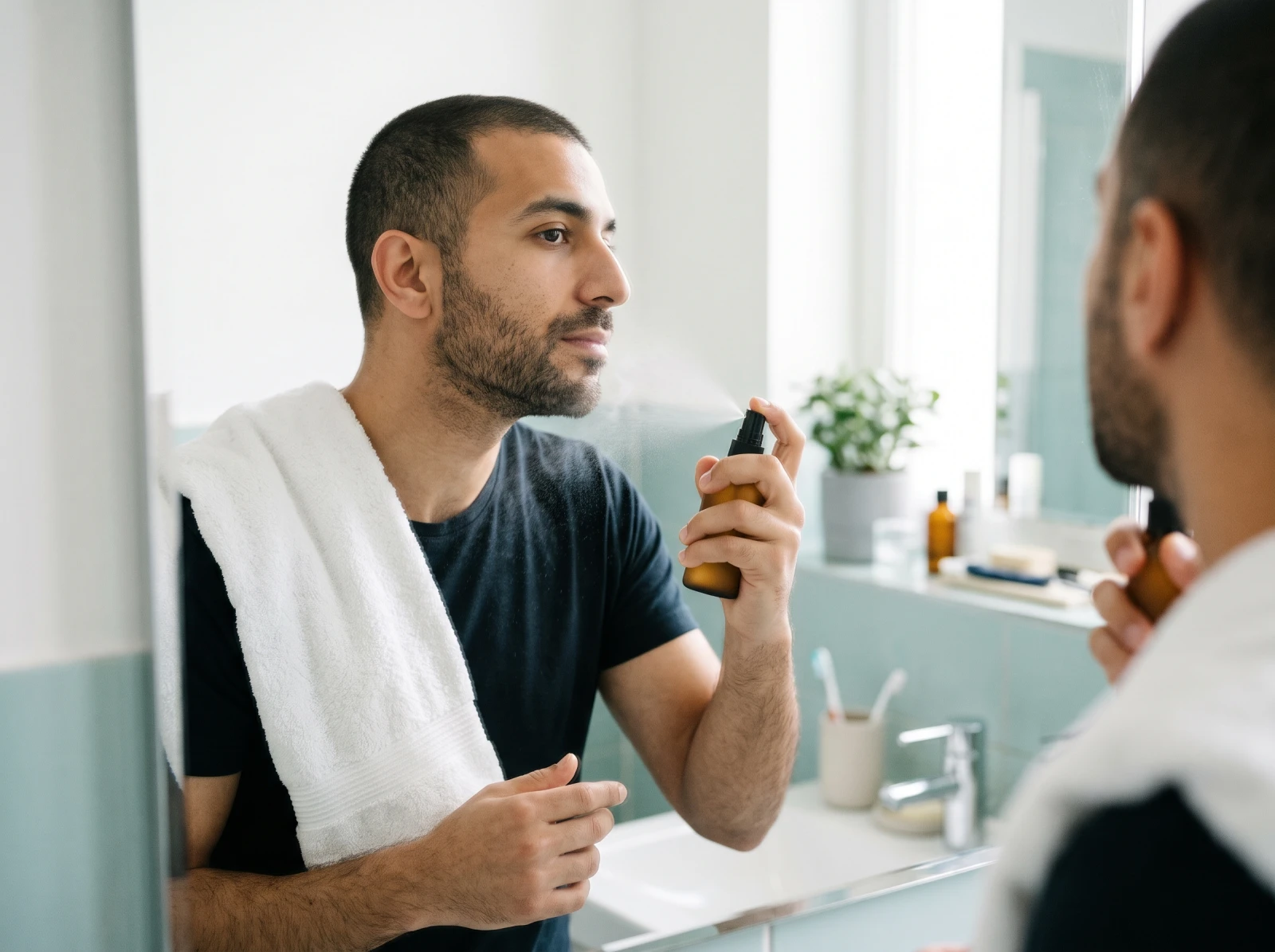
- Moisture: the grafted area is kept moist for the first five days, which reduces scab formation and helps the grafts settle. In another study, patients were asked to spray the area regularly with saline to reduce scabbing and limit the risk of infection.
- Redness and swelling: mild redness and slight facial swelling are common and usually ease within two or three days. Swelling and bruising caused by the anaesthetic fluid may also appear and fade within about a week.
- Medicines: the doctor usually prescribes an antibiotic and a painkiller for a few days.
- Caution: avoid scratching or rubbing the area so the new grafts are not dislodged.
- Donor area: small scabs form at the back of the head and usually clear within one to two weeks, according to the International Society of Hair Restoration Surgery (ISHRS). It is the same timeline we described in our guide to going back to work after a hair transplant.
Day 8: the first shave
The review in the Indian Journal of Plastic Surgery states that shaving is usually possible from day 8. Even so, follow your doctor's instructions on when and how to shave, and use light strokes without pressing on the grafted area.
Weeks 2 and 3: temporary shedding
After one to two weeks the transplanted hairs start to fall out, as a study in the International Journal of Trichology explains. This does not mean the transplant has failed: the roots remain in the skin and will produce new hair after a resting phase.
At this stage the beard may look thinner than it did right after surgery. Patience is part of the plan.
Day 30 and beyond: when does growth return?
In the same study, which followed 20 patients who had an FUE beard transplant, growth began 3 months after surgery and continued until the end of the year. The result was rated "very good" in 11 patients and "good" in 8, and 19 of them were satisfied with the final result.
The researchers noted that density was good in men born with a sparse or absent beard, while those who had lost their beard to burn scars often needed more than one session.
If you would like to see the steps of the procedure and photo results before deciding, you can plan your beard transplant in Turkey with International Clinics.
What can happen and needs follow-up
- Small bumps: these may appear around the grafts, especially below the lower lip and on the chin.
- Hair direction: some transplanted hairs may grow at an unwanted angle, because grafts can shift slightly while healing.
- Signs of infection: increasing redness, pain or discharge call for a visit to the doctor.
The review notes that precise technique and very small incisions reduce these problems.
A month of care, a year of waiting
The first month after a beard transplant is about protecting the grafts: moisture and calm in the first week, gentle shaving after that, and patience through temporary shedding. The real result takes shape over a full year.
Sources: Indian Journal of Plastic Surgery: beard and moustache restoration, International Journal of Trichology: beard restoration with FUE, Facial Plastic Surgery Clinics of North America: facial hair transplantation, International Society of Hair Restoration Surgery (ISHRS): FUE
FAQ
When can I shave after a beard transplant?
Shaving after a beard transplant is usually possible from day 8, according to a review in the Indian Journal of Plastic Surgery, while following your doctor's instructions on when and how to shave.
When do transplanted hairs fall out after a beard transplant?
Transplanted hairs start to shed temporarily about one to two weeks after a beard transplant, while the roots stay in the skin to produce new hair later.
When does hair grow after a beard transplant?
Hair growth after a beard transplant usually begins after about 3 months and keeps improving until the end of the first year.
How can I reduce scabs after a beard transplant?
Scabs after a beard transplant are reduced by keeping the grafted area moist in the first days, or spraying it with saline as the doctor instructs, while avoiding scratching and rubbing.
Where are beard transplant grafts taken from?
Beard transplant grafts are usually taken from the middle of the back of the scalp, because that hair is close to beard hair in thickness and texture and resists genetic hair loss.
Is swelling normal after a beard transplant?
Yes. Mild redness and slight swelling after a beard transplant are common and usually ease within two or three days, and bruising from the anaesthetic fluid may fade within about a week.
Is one session enough for a beard transplant?
One session is enough for a beard transplant in many cases, but men who lost their beard to burn scars may need more than one session to reach a good density.