Choosing a breast implant: type, shape and placement
- Breast implants come in two main types, saline and silicone gel, and silicone feels closer to natural breast tissue.
- Round implants give more upper fullness; teardrop implants project more at the bottom but can rotate and need correction.
- In an analysis of more than 51,000 patients, capsular contracture was more common with implants over the muscle than under it.
- The US FDA stresses that breast implants are not lifetime devices and may require further surgery.

Once a woman decides on breast augmentation with implants, she faces a series of technical choices: what the implant is filled with, its shape and surface, and where it sits. Each choice affects how the breast feels and looks and which complications may arise in the long run. This guide explains the options in plain language, drawing on the American Society of Plastic Surgeons, the US Food and Drug Administration and recent research, so you arrive at your consultation knowing what to ask.
The filling: saline or silicone?
The American Society of Plastic Surgeons (ASPS) explains the difference between the two types:
- Saline implants are filled with sterile salt water. If one leaks, it deflates and the body absorbs and eliminates the solution naturally. In the US they are approved for augmentation from age 18.
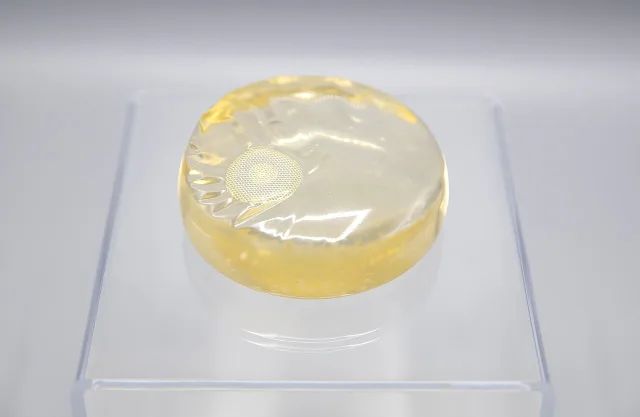
- Silicone gel implants feel closer to natural breast tissue. If one ruptures, the gel may stay inside its shell or escape into the surrounding pocket, and the implant does not collapse. In the US they are approved for augmentation from age 22.
ASPS notes that silicone implants may need regular checks to confirm they are intact. The FDA adds that a silicone rupture can be "silent", changing neither shape nor feel; MRI is the most effective way to detect it, and ultrasound is an acceptable alternative for women without symptoms.
The shape: round or teardrop?
- Round implants tend to give the breast more fullness, and high-profile versions add more forward projection. Because they are symmetrical in every direction, rotation is less of a concern.
- Teardrop (anatomical) implants are made of form-stable silicone and keep their shape even if the shell breaks. They project more at the bottom and taper towards the top, and they are firmer than traditional implants. If they rotate, however, the breast can look unnatural and may need corrective surgery; they also require a slightly longer incision.

The surface: smooth or textured?
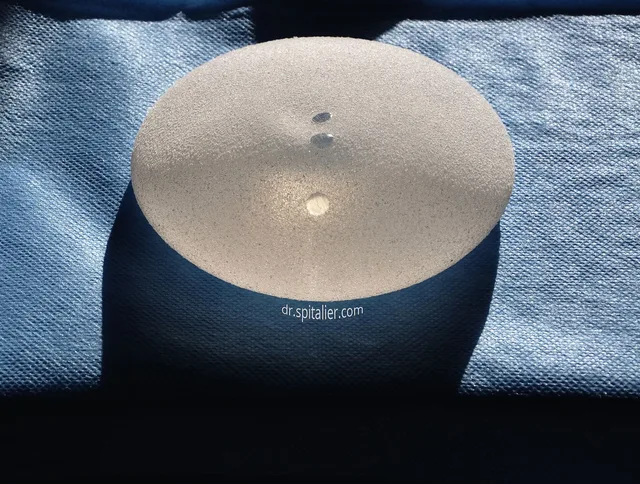
According to ASPS, smooth implants feel the softest and move with the pocket, giving more natural movement, although visible or palpable rippling can appear under the skin. Textured implants let surrounding tissue adhere to them, so they move less.
ASPS warns, however, that a rare lymphoma linked to implants (BIA-ALCL) occurs mostly in women with textured implants. This is something to discuss openly with your surgeon. Implant position can also change over time: our report on an ultrasound study that found implant flipping in one in eight patients shows why follow-up matters.
The placement: over or under the muscle?
ASPS explains that the implant goes either under the chest muscle or directly behind the breast tissue, over the muscle. The choice depends on the implant type, the degree of enlargement wanted, body type and the surgeon's recommendation.
A systematic analysis published in 2026, covering 91 studies and more than 51,000 patients, found capsular contracture, the hardening of the scar tissue that forms around an implant, in about 6.85% of implants placed over the muscle, compared with 1.83% under the muscle and 1.99% with the dual-plane technique. Another analysis from the same year found no difference in patient satisfaction between the two approaches, so the researchers concluded that pocket choice remains an individual decision.
To compare implant options and see what the procedure involves step by step, read this guide to breast augmentation surgery in Turkey, with answers to the most common questions.
What you should know about implant lifespan
The FDA stresses that breast implants are not lifetime devices. The longer they are in place, the more likely complications become, and some of them require further surgery. The complications it lists include capsular contracture, rupture, changes in nipple or breast sensation and implant displacement.
The FDA also notes that some patients have reported systemic symptoms such as fatigue, memory problems and joint pain, known as "breast implant illness". Their causes are not yet well understood and are still being studied.
Questions for your consultation
- Which implant type, shape and surface suit my body best, and why?
- Will it go over the muscle, under it, or dual plane?
- What follow-up and imaging plan applies if I choose silicone?
- What complications are possible, and how are they treated?
ASPS says acute pain usually eases within one to five days, though some pain and swelling can last for weeks, and patients wear a support bra around the clock as their surgeon instructs. Demand keeps growing worldwide, as our report on the latest ISAPS global survey of cosmetic procedures shows, which makes an informed choice all the more important.
An informed choice for a natural result
There is no implant that is perfect for everyone. Filling, shape, surface and placement work together to create a result that suits your body. Discuss every option with your surgeon and ask about long-term follow-up before you decide.
To learn about silicone implant types, the steps of breast augmentation and its results, read the International Clinics guide to breast surgery in Turkey.
Sources: American Society of Plastic Surgeons: Breast implant types, American Society of Plastic Surgeons: Breast augmentation procedure steps, US FDA: Risks and complications of breast implants, Aesthetic Plastic Surgery: Pocket selection in breast augmentation, Aesthetic Surgery Journal: Subpectoral versus prepectoral implants
FAQ
What is the difference between silicone and saline breast implants?
Saline breast implants are filled with sterile salt water and deflate if they leak, while silicone breast implants feel closer to natural breast tissue and do not collapse if they rupture, according to the American Society of Plastic Surgeons.
Which is better for breast augmentation, round or teardrop implants?
No implant is best for everyone in breast augmentation: round implants give more fullness and rotation is less of a concern, while teardrop implants project more at the bottom but can rotate and need correction; the surgeon chooses what suits the body.
Are breast implants placed over or under the muscle?
Breast implants are placed over the chest muscle, under it or with the dual-plane technique; a systematic analysis found capsular contracture in about 6.85% of implants over the muscle versus 1.83% under it, and the decision remains individual.
Do breast implants last a lifetime?
No. Breast implants are not lifetime devices, according to the US FDA; the longer they are in place, the more likely complications become, and some may require further surgery.
How is a silicone breast implant rupture detected?
A silicone breast implant rupture is detected with MRI, the most effective method, or with ultrasound as an acceptable alternative, because a rupture can be silent and change neither shape nor feel.
What is capsular contracture after breast augmentation?
Capsular contracture after breast augmentation is the hardening of the tissue that naturally forms around the implant; it can change the breast's shape or cause pain and is more common with implants placed over the muscle.
Are textured breast implants safe?
Textured breast implants move less inside the breast, but a rare implant-associated lymphoma occurs mostly with textured surfaces, so their risks should be discussed with the surgeon.
How long does pain last after breast augmentation?
Acute pain after breast augmentation usually eases within one to five days, although some pain and swelling can last for weeks, according to the American Society of Plastic Surgeons.