Dental implants long term: bone stayed within accepted limits around 98.5% of implants for up to 11 years
- A US study followed 65 dental implants in 38 patients for 5 to 11.6 years.
- Bone levels were stable or improved on 87.5% of implant surfaces.
- 64 of 65 implants (98.5%) met the radiographic bone-level criterion.
- Results were similar for digital and conventional impressions.
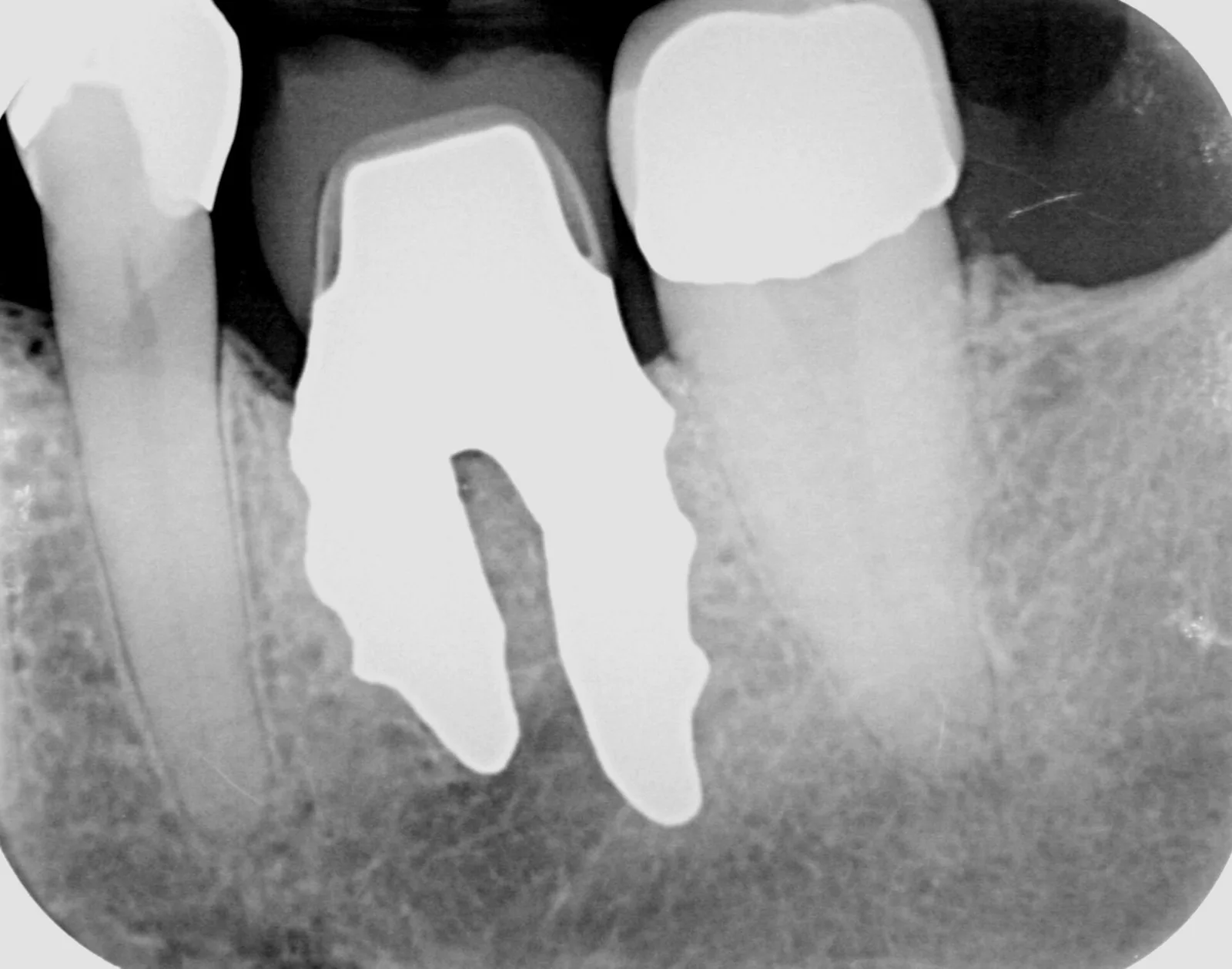
A key question for anyone considering dental implants is whether the bone around them stays stable over the years. A study by Dr Michael Klein and Dr Dennis Tarnow, director of implant education at Columbia University College of Dental Medicine, published in the Journal of Dentistry in November 2026, offers a reassuring answer.
The study
The researchers followed 65 implants in 38 patients for 5 to 11.6 years, an average of 9.1 years after placement, comparing bone levels on X-rays between restorations made from digital and conventional impressions.
Also read: Robotic dental implant surgery for toothless jaws: placement errors under a millimetre
The results
Of 128 evaluable surfaces, bone improved on 21.9%, stayed stable on 65.6% and decreased on 12.5%, so 87.5% maintained or improved. Outcomes were similar for digital (86.9%) and conventional (88.6%) impressions. Overall, 64 of 65 implants (98.5%) met the radiographic bone-level criterion.
A careful reading
The study is small and descriptive and does not prove the two methods are biologically equivalent, but it is reassuring for restorations made from digital impressions. For anyone exploring dental implants in Turkey, regular check-ups and X-rays remain essential to keeping implants healthy.
Source: Journal of Dentistry (PubMed)
This story is relayed from the source named above; responsibility for its content rests with the original source.
FAQ
Does bone stay stable around dental implants over time?
In a study following 65 implants for up to 11.6 years, 87.5% of implant surfaces maintained or improved their bone level.
Are digital impressions as good as conventional ones for implants?
In a long-term study, bone outcomes around implants were similar with digital (86.9%) and conventional (88.6%) impressions.
How long were the implants followed in the study?
The study followed dental implants for 5 to 11.6 years, an average of 9.1 years after placement.